
or a list of goodies.

Go here for some good data displays
https://inequality.stanford.edu/publications/20-facts-about-us-inequality-everyone-should-know
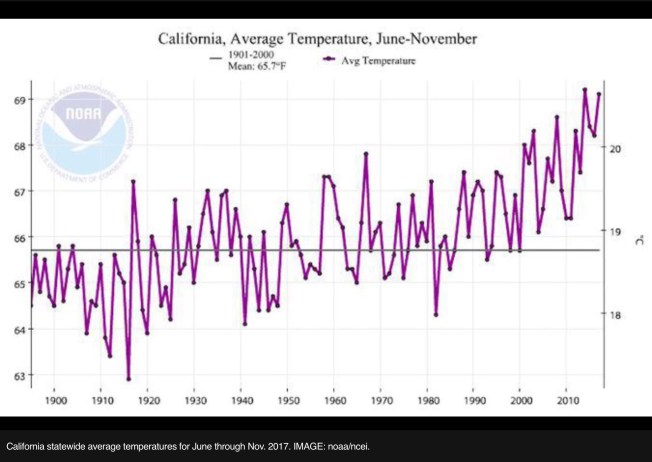
Image what we could have, with just a little more effort.

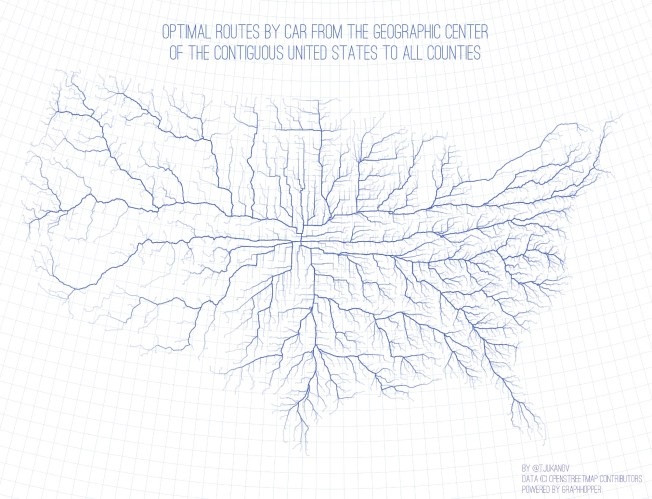
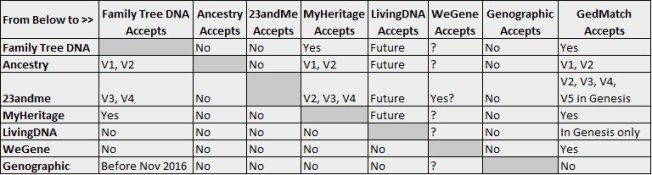
a question asked for amusement, typically one with a pun in its answer.

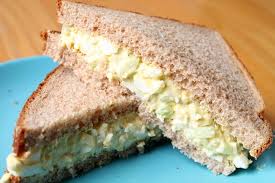 This egg salad is quite tasty and has no mustard!
Ingredients
• 4 hard boiled eggs
• 5 tbsp sweet pickle relish
• 2 tbsp mayonnaise
• 1 tbsp olive oil
Combine and stir all ingredients in bowl. Mash up the eggs. Toast your bread, spread on the salad, perhaps add a lettuce leaf and enjoy!
The above amount makes enough for 3 to 4 sandwiches.
We like Milton’s Healthy Whole Grain bread for the sandwiches, but a good sourdough bread or bagel would be nice too.
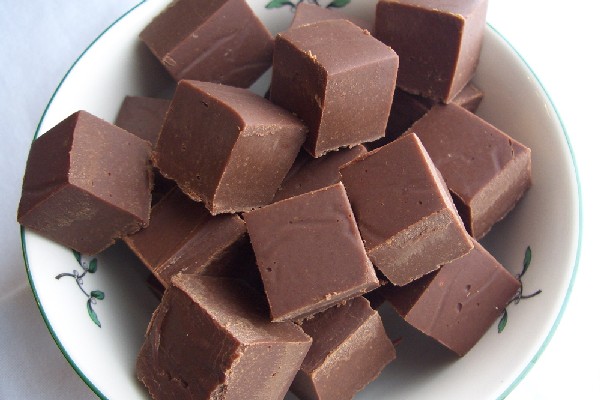
This fudge is really good. we had lots of it over the holidays. And it is sooo simple to make.
Ingredients
Combine all ingredients (except nuts) in bowl. Microwave on high until 50% of the chips have melted, stirring frequently (approx. 3-5 minutes). Remove from microwave and stir in nuts. Pour into greased square dish. Refrigerate until set.
(You can leave out the nuts, if you prefer. It is delicious that way too!)
Cut into squares and Enjoy!
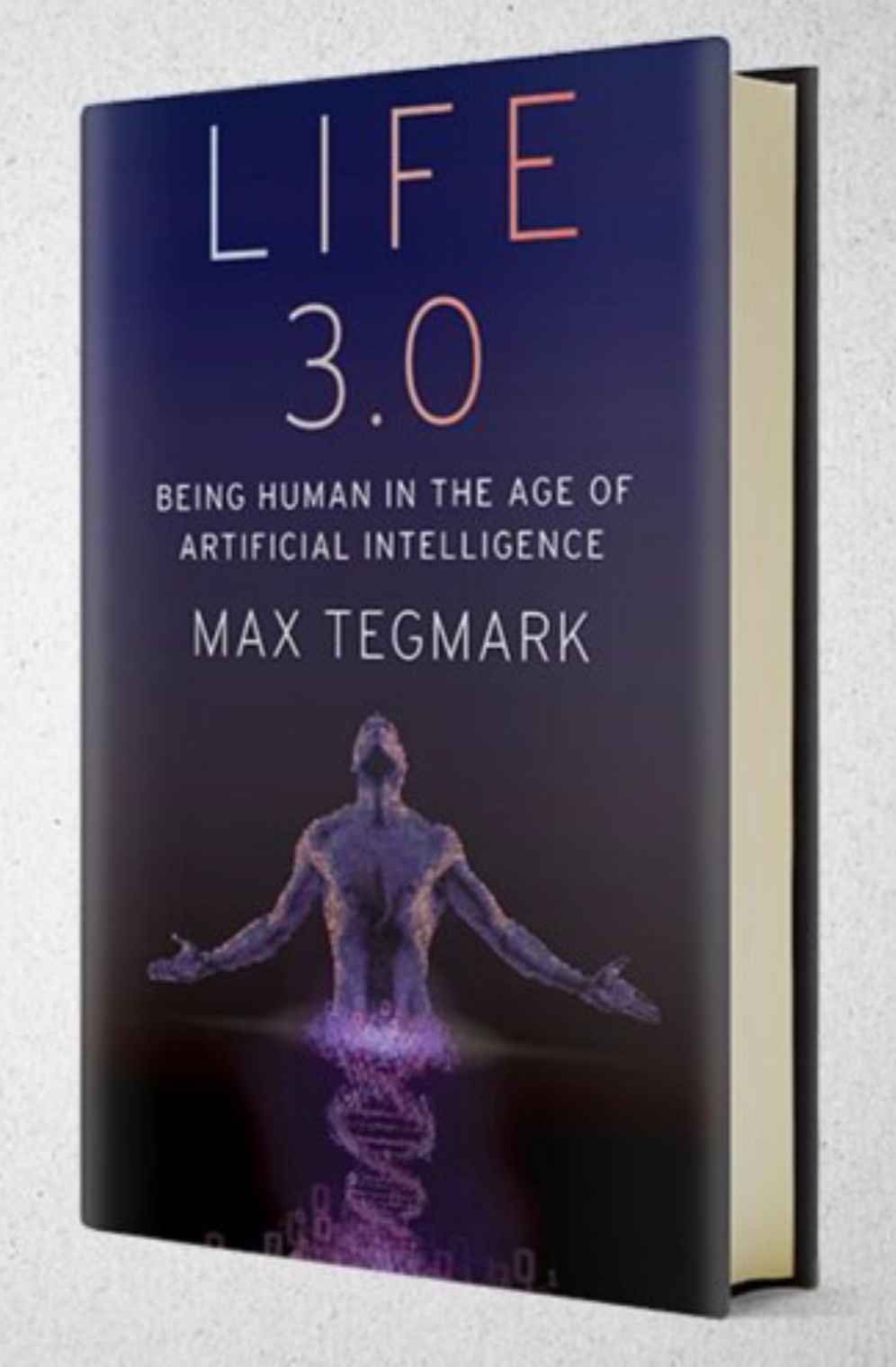 If you’re interested in artificial intelligence (AI), I highly recommend that you read this new book Life 3.0 by Max Tegmark, a professor at MIT. His book is an easy read for the amateur and weighty enough for the AI students and professional. It explains (finally someone got it through to me) how neural networks work, how our mind learns and remembers and generally how machines can be built to mimic these processes. This is a realistic book, issues in the future are explained, not sidestepped. This is a science book that is not only important, but fun to read. I give it 5 stars!
“This is a conversation that everyone needs to join. But for them to join it constructively, we need to educate them about what the challenges and opportunities actually are. Otherwise it degenerates into the scaremongering that the British tabloids do. Ultimately, this is a very exciting opportunity. Everything I love about civilization is the product of intelligence. If we can create a beneficial superintelligence, we can help humanity flourish better than ever before.” — by Max Tegmark
“Worth reading Life 3.0 by @Tegmark. AI will be the best or worst thing ever for humanity, so let’s get it right.” — by Elon Musk in Twitter
“We always overestimate the change that will occur in the next two years and underestimate the change that will occur in the next ten. Don’t let yourself be lulled into inaction.” – by Bill Gates
“If there were no God, it would be necessary to invent him.” – so said Voltaire

Once in a while, you come across a really good restaurant. When you do, it is important to let others know about it – share the wealth, as they say. Well, I ate at a really good “cafe” yesterday and have to give praise.
The 4th S. Cafe & Bakery in Orland, CA is a great place to eat breakfast or lunch. The food is good, there is lots of it. It is wholesome and healthy faire. Breakfast is served all day. The jelly was served in glass cups!
Orland is located on Interstate 5 about 90 miles north of Sacramento. A crow would fly due west from Chico! The address is 824 4th Street, Orland, CA 95963. From I-5 take the Newville Rd/Hwy. 32 exit. Head east about 1/2 mile and turn right on 4th Street. They are two blocks down on the right hand side, across from the Orland Post Office.
If you are driving on I-5 in central California in the morning hours and feel hungry, do take the time to find this great cafe. When we were there, a group of County Sheriff deputies were too. You know they know where the good eats are to be found!
I rate it 5/5 stars and I recommend the Veggie Lover’s Omelet! 
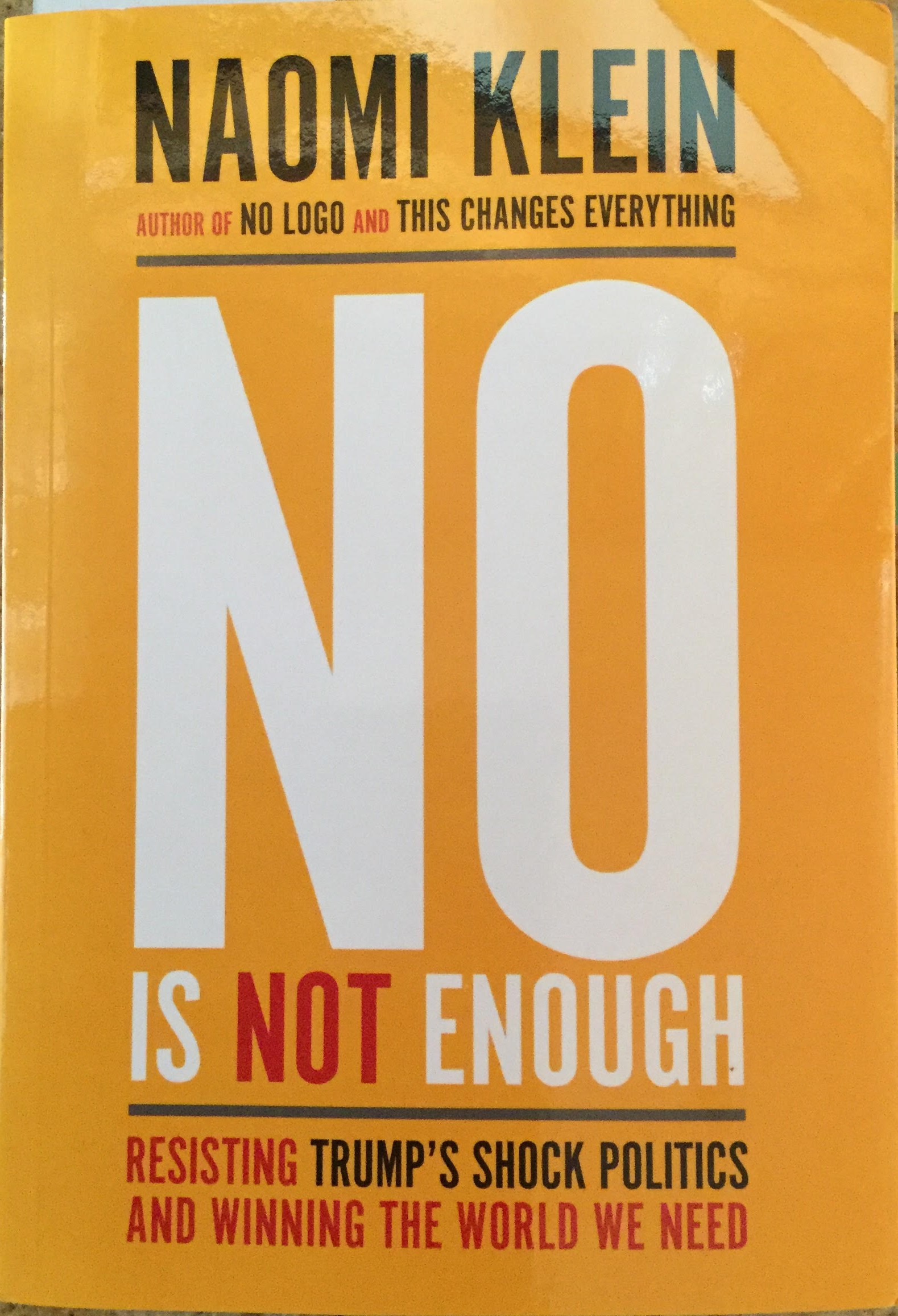
The new book “No Is Not Enough” by Naomi Klein should be read by all. It was rushed out in reaction to Donald Trump, but includes important comments about climate change and the anthropocene.
Because one of the most unjust aspects of climate disruption is that our actions as adults today will have their most severe impact on the lives of generations yet to come, as well as kids alive today who are too young to impact policy — kids like Toma (her son) and his friends, and their generation the world over. These children have done nothing to create the crisis, but they are the ones who will deal with the most extreme weather — the storms and droughts and fires and rising seas — and all the social and economic stresses that will flow as a result. They are the ones growing up amidst a mass extinction, robbed of so much beauty and so much of the companionship that comes from being surrounded by other life forms.
The above quote from the book is how I feel about my grandchildren (aged 12-19). Global warming, climate change, neoliberalsim, the USA oligarchy, Trumpism, all of these things are not their fault. The adults of the “western world” have effed up society and the planet so bad that I feel revolution will be the only way out. And these kids will be fighting the wars, unless we can help wake people up to the dangers.
Get a copy of the book, buy it, library it, borrow it. And learn more at
“I’m not looking to overthrow the American government, the corporate state already has..” – John Trudell
I love my state — California. We have an Assembly Bill AB 1887 that prohibits state sponsored travel to 8 states that have passed laws discriminating against various classes of people. I think more states should follow suit, to put pressure on these backward, mean state governments.
This list is here to help me remember to not vacation in these states and to minimize travel time if we must travel through them on the way to somewhere else.
• Alabama
• Kansas
• Kentucky
• Mississippi
• North Carolina
• South Dakota
• Tennessee
• Texas
Some day, hopefully, these states will change their laws and support all people.
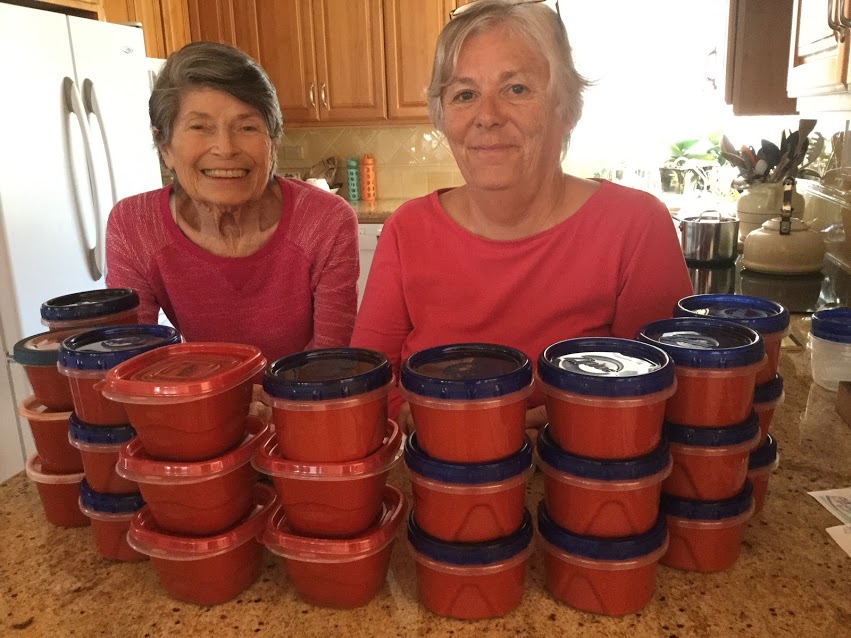 Barbara bought dried red chili pods from www.newmexicanconnection.com (medium and hot) and then brought them to our house to process them. They deseeded the pods, soaked them, blended with water, and strained the skin to create the concentrate. When I saw that they had to wear rubber gloves for protection, I knew they were using the real stuff! We used to buy frozen Bueno Chili and bring it home from Gilbert, AZ in coolers, but this stuff was much hotter (and better) like her family had in Albuquerque, NM. Sandy’s deceased brother George and I only liked the “hot stuff”.
They had 4 bags of the dried peppers, which produced about 60 cups of concentrated chili. We put it into 2 cup plastic containers and froze all but enough to eat for the next few days. It is lots of work, but worth it in the end. Be sure to do this in a well ventilated area!
I eat the chili (mixed with turkey) over baked potato with beans, cheese and lettuce. Everyone else uses hamburger and tortillas. “Raw” chili is so much better than the stuff in jars. We never had this stuff in Iowa! One of these days, we will have to try mixing the chili into turkey meat loaf for flavoring. Mmmm
You can also buy Sopaipilla mix from this website. Instructions for both chili pepper processing and sopaipilla are included.
“The journey is the reward.” – Buddha
Yield: 4 people
Ingredients
• 1/2 package egg noodles
• 1 1/2 lbs. lean ground turkey
• 2 cups sliced mushrooms
• 3 packages brown gravy mix
• 3 tablespoons sour cream
• 1 teaspoon “Better Than Bouillon” (BTB)
• 3 cups water
Preparation
Sauté the mushrooms.
Add the turkey (crumble it) and brown it.
Sprinkle gravy mix over turkey, add the water.
Stir until gravy is thickened. Stir in BTB.
Reduce heat, let simmer 20 minutes.
Cook the noodles according to package directions.
Turn heat under turkey mix off. Stir in the sour cream.
Serve turkey mix over the noodles.
As side dishes, include
• cottage cheese
• can of pears
• can of warmed green beans
Excellently received by all.
Noam Chomsky appeared at Google in Cambridge May 23, 2017, to speak to an audience of primarily Google staff. The video of the “Google Talks” event was published to YouTube June 5.
This discussion seemed to be more personal than I have heard Chomsky before. Usually Professor Chomsky is “on topic” all the time. The interviewer did a great job, acting like a student sincerely interested in Chomsky’s early life and how he became an activist.
Later in the talk, the word “internet” came up, more and more. Chomsky obviously uses Google products, but only mentioned Google Translate specifically.
He warned about using Artificial Intelligence for more than just data mining. AI should be used for more humanistic endeavors. Understanding ourselves, our species, should be the focus of our prime directive.
I enjoyed it and recommend that you take an hour to listen to a very open discussion: human existence should be our number one priority.
You can watch it by clicking here
or by going to www.youtube.com/watch?v=2C-zWrhFqpM directly.
You can also just search in YouTube.
Solving big problems is easier than solving little problems. – Sergei Brin
This was found in the July/August 2017 issue of Discover Magazine. It shows an interesting way to categorize science fiction movies, in particular SETI movies. I would like to see other films done this way too.
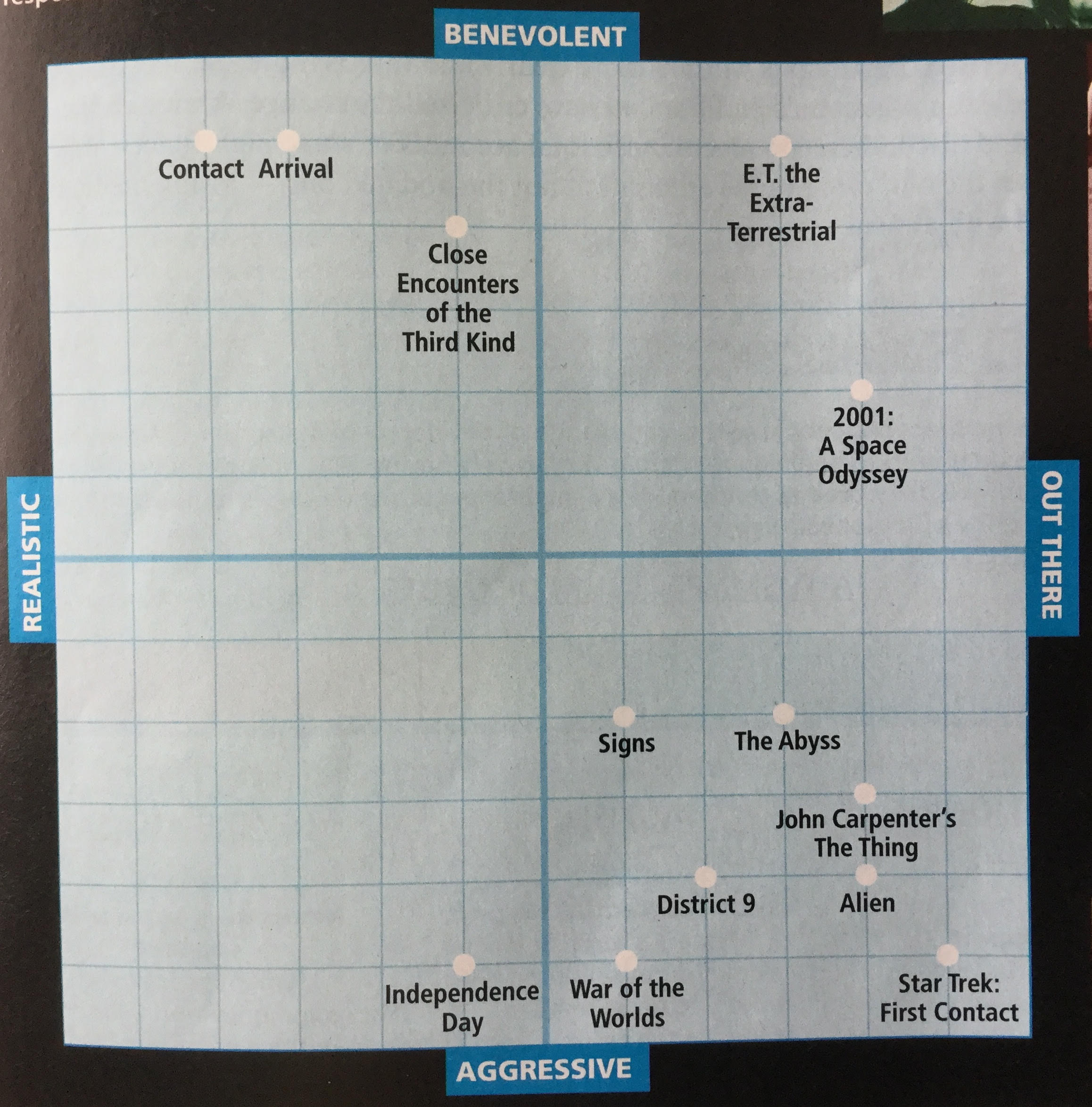
from Discover July/August 2017
Yield: 4 people
Ingredients
Preparation
Preheat oven to 425 degrees.
Chop up mushrooms and zucchini and sauté.
Mix together eggs and milk and pour in greased 7″/11″ dish.
Mix in cooked veggies and spinach and seasonings.
Top with cheese.
Cook for 20-30 minutes.
 good for breakfast, lunch or even dinner!

