Unknown's avatar

Human Existence Is in Peril

Whitney Robson Harris (August 12, 1912 – April 21, 2010) was an American attorney, and one of the last surviving prosecutors from the Nuremberg Trials. He wrote the following piece in 2006 at the age of 94.

Given the issues that Donald Trump has brought to our country and our world, I think it is important that we remember that God isn’t going to come along and save us from him, after the fact. We are going to have to solve the Donald Trump issues ourselves. As my Dad used to say: “Get up and do it yourself.” We can’t wait, get involved now. Don’t wait until it is too late.

This paper has always impressed me. So I am sharing it now with a spirit of hope. Be sure to read the finale.


Human Existence Is in Peril — by Whitney R. Harris — June 2006

If we attempt to comprehend this vast universe with its millions of fiery stars and frightening dark holes, and say for comfort that only God could have created it, and therefore, there is a God, we default in our reasoning, for we are unable to answer the further question, “who created the God who created the universe?”

We do know that we live on Earth, spun off from the sun and, therefore, on a planet with a beginning. Moreover, we know that, once a fiery ball, the Earth has cooled and gained life upon its surface — static, nonthinking plants and mobile, thinking animals. We do not know whence came the first manifestation of that life — the tiniest amoeba — capable of discernible thought and movement. To ignite the spark of life requires the hand of God. Never mind the universe. Here on Earth, we find the quintessential role of God.

Hence, I believe first, that God exists.

Until this time at least, man has evolved far beyond any other animals on Earth in comprehension and intelligence. The carnivores exceed his strength on land; the amphibians surpass his power at sea. But man has the gift of reason, which enables him to dominate life on Earth — and the chance to survive as long as the solar system remains hospitable to him. That chance, alas, is not eternal.

And, thus, I believe human life is finite.

Within these limits of survivability man holds his destiny in his own hands. He has yet to prove his worthiness. In the last century, he destroyed more of his own kind in war and in merciless murder than in any other time in history. He is fated to acquire the capability of obliterating himself and all other life upon this planet. And he seems unable to appreciate the consequences of that power. The life that God gave to him may be by him destroyed.

And so, I believe human existence is in peril.

The challenge to man is to establish and to maintain the foundations of peace and humanity upon the Earth for the centuries to come that God has allotted him to live upon this planet. He must learn to end war and protect life, to seek justice and find mercy, to help others and embrace compassion. Each man must respect every other man and honor the God who made this incredible mystery of human life a reality.

I believe there is God,
I believe God is merciful and just,
But if man desires to destroy himself
I believe God will not save him.


Unknown's avatar

New films

A couple of neat films have been released this week.


The first is short, about 6 minutes long, is from the American Museum of Natural History about human population growth over the last 200,000 years, called Human Population Through Time. It is a relaxing view.

Watch it by clicking here.


The other is from Leonardo DiCaprio as he explores the topic of climate change. This one is longer, about 1.5 hours, but I think it is well worth it. This is an excellent movie, in my opinion, and we should really thank Leonardo DiCaprio for the time and money he spent on this film.

You can see it by clicking here, to go to into YouTube

www.youtube.com/watch?v=90CkXVF-Q8M

or even watch it here directly.

https://www.youtube.com/watch?v=90CkXVF-Q8M


Unknown's avatar

Don’t try to extend your life span, instead, improve your health span

Dr. Vijg, an expert on aging at the Albert Einstein College of Medicine, says humans will never get older than 115. The paragraphs below are from this New York Times article.

New York Times 06 October 2016, Science section

Some of those improvements have come from quitting smoking and having better diets. Antibiotics and drugs for chronic disorders like heart disease have also helped. But all of the improvements of modern life, Dr. Guarente and others argue, have not turned back the underlying biological process of aging.

Based on his own experimental research, Dr. Vijg describes aging as the accumulation of damage to DNA and other molecules. Our bodies can slow the process by repairing some of this damage. But in the end it’s too much to fix.

“At some point everything goes wrong, and you collapse,” Dr. Vijg said.

The best hope for our species is not to extend our life spans, Dr. Vijg argues, but to lengthen our years of healthy living — with healthy habits and perhaps drugs that can repair some of the cellular damage that comes with time.

“There’s a good chance to improve health span — that’s the most important thing,” Dr. Vijg said.

You know how…. the old standards do work. Watch your diet, do regular exercise, beware of stress (perhaps meditate) and visit your doctor at least annually.


“Your experiences today will influence the molecular composition of your body for the next two to three months, or, perhaps, for the rest of your life. Plan your day accordingly.” – Steve Cole


Unknown's avatar

Some thoughts from October 2016

img_1022

Random quotes from magazines.

Nature 20 October 2016 World View

It’s worth noting that a conscious superintelligent AI might actually be less dangerous than a non-conscious one, because, at least in humans, one process that puts the brakes on immoral behaviors is ‘affective empathy’: the emotional contagion that makes a person feel what they perceive another to be feeling. Maybe conscious AIs would care about us more than unconscious ones would.

There is a chance that the first superintelligent AI will be the only one we will ever make. This is because once it appears – conscious or not – it can improve itself and start changing the world according to its own values.


Science 21 October 2016 Science Lessons for the Next President

As the world warms, its oceans are swelling by an average of 3.2 millimeters a year; they have risen by nearly the height of a playing card since 1993. Some 40% of this increase stems from the physical expansion of water as it heats. The rest is mostly caused by melting mountain glaciers and retreating ice sheets in Greenland.

Because of regional geology, ocean currents, and shifts in gravitational pull caused by changes on Earth’s surface, such as the melting of massive ice sheets, the ocean does not rise evenly everywhere. Much of the East Coast is sinking as Earth’s mantle continues to adjust in complex ways to the disappearance of weighty ice age glaciers. …. These forces mean East Coast sea levels are rising at double the global rate, and at triple the average in Virginia and many points north.


Just a quote

“People worry that computers will get too smart and take over the world, but the real problem is that they’re too stupid and they’ve already taken over the world.” – Pedro Domingos in his 2015 book The Master Algorithm


Unknown's avatar

Happiness Genes Discovered

According to a publication in the Journal Nature Genetics, for the first time in history, researchers have isolated the parts of the human genome that could explain the differences in how humans experience happiness.

Now, before we all run out to get our genes changed via CRISPR, realize these genes do not make you happy. And in fact, epigenetics can influence how genes are expressed. The researchers found three genetic variants for happiness, two variants that can account for differences in symptoms of depression, and eleven locations on the human genome that could account for varying degrees of neuroticism. The genetic variants for happiness are mainly expressed in the central nervous system and the adrenal glands and pancreatic system.

I have not seen the full article yet, it is behind a pay firewall. So be leery of what I say next. A previous study using data from the World Values Survey in 2014 found a correlation between the allele value “A” in the “FAAH” gene rs324420. Nations with the highest prevalence of the “A” allele were also those who perceived themselves happiest.

So just for fun, I decided to look up values for this allele in 23andme data for some of my family members. Here are the results:

  • AA – Sandra
  • AC – Courtney, Debra, Jamie
  • CC – Jim, Rachel

What fun!  I better watch what I eat!   I’m looking forward to finding a copy of the full study to see what the 16 real alleles are.   Meanwhile, Rachel and I had better practice smiling! 🙂  BTW, this is a real tongue in cheek posting.  Nothing said herein should be taken seriously.  My biorhythms are just running high today.

zoozimp2_251_243

Unknown's avatar

January heats up

The T-V and newspaper news outlets tend not to report news about Climate Change these days. I guess it isn’t confrontational enough. But the Nature magazine isn’t afraid to be non-confrontational! In this weeks Feb 25, 2016 issue, Nature told us about a report just produced by NOAA. I am setting here in 77 degree weather in Pacific Grove, CA in February during a supposedly super El Nino season thinking how I shouldn’t really be enjoying this. To relieve my guilt, I will pass this “news” forward.

Last month was the world’s hottest January since records began in 1880, and the ninth month in a row to break a global monthly temperature record, the US National Oceanic and Atmospheric Administration reported on 17 February. The average global temperature was 1.04 Celsius above the twentieth-century average for January, beating the previous record, from 2007, by 0.16 Celsius. In the Arctic, which was remarkably warm for the time of year, sea ice was at its lowest January extent since records began in 1979, according to the US National Snow and Ice Data Center.

I don’t need NOAA to tell me about February — I can tell this will have been a warm month too.

Unknown's avatar

Technical Words

thinking in 2016 – second decade in the twenty first century CE (the first century of the 3rd millennium)

CRISPR is a genetic editing tool. The name stands for Clustered Regularly Interspaced Short Palindromic Repeats. The CRISPR interference technique has enormous potential application, including altering the germline of humans, animals and other organisms, and modifying the genes of food crops.

(germline in organisms refer to those cells that may pass on their genetic material to the progeny. For example, gametes such as the sperm or the egg are part of the germline.)

In the current thinking, many people feel that using CRISPR to modify germline cells in humans would be wrong. The fear is that we would be stepping into the world of “designer babies”, especially where the rich “one percent” would be able to create a master race, similar to Hitler’s breeding program.

The alternate view is that we could use CRISPR to eliminate genetic diseases, removing BRAC1/2 cancer causing genes for example, from a family line. We could potentially stamp out many of our most formidable illnesses.

Using CRISPR to modify food crops is much less controversial. We could, for example, eliminate the spoiling/browning of apples, bananas and mushrooms. Or we could create drought tolerant plants, useful in the global warming scenarios.

My view? Go for it! Eliminate diseases and the need for deodorant, stamp out mosquitoes, and let me be healthier longer.


“The greater the ignorance, the greater the dogmatism.” – Sir William Osler


Unknown's avatar

Gravitational waves detected just as Einstein predicted

The news was announced today, February 11, 2016. The actual detection happened about 5 months ago. It took this long to verify what happened.

Just over a billion years ago, a pair of black holes collided. They had been circling each other for aeons, gathering speed with each orbit. By the time they were a few hundred miles apart, they were whipping around at nearly the speed of light. Space and time became distorted. In the fraction of a second that it took for the black holes to finally merge, they radiated a hundred times more energy than all the stars in the universe combined. They formed a new black hole, sixty-two times as heavy as our sun and almost as wide across as the state of Maine. Then space and time became silent again.

The waves rippled outward in every direction, weakening as they went. On Earth, dinosaurs arose, evolved, and went extinct. The waves kept going. About fifty thousand years ago, they entered our own Milky Way galaxy, just as Homo sapiens were beginning to replace our Neanderthal cousins as the planet’s dominant species of ape. A hundred years ago, Albert Einstein, one of the more advanced members of the species, predicted the waves’ existence, inspiring decades of speculation and fruitless searching. Twenty-two years ago, construction began on an enormous detector, the Laser Interferometer Gravitational-Wave Observatory (LIGO). Then, on September 14, 2015, at just before eleven in the morning, Central European Time, the waves reached Earth. This morning, in a press conference in Washington, D.C., the LIGO team announced that the signal constitutes the first direct observation
of gravitational waves.

Above text quoted from The New Yorker Magazine. CLICK HERE to read the complete story.

You can see that super simulation of the block hole collision in the following Youtube video. Or CLICK HERE if you are viewing this in the email announcement produced by WordPress.

If you want to read more about this amazing discovery, CLICK HERE and you will be taken to an excellent web site called SXS which stands for Simulating eXtreme Spacetimes.

—-

I posted this here tonight because if this is true, this is one of the biggest “discoveries” of the last few years!  It needs to be remembered that some people really did notice.

My wife asked why it is important.  Well hey, if gravity really is made of waves, then maybe those people who saw flying saucers weren’t crazy after all.  Because of course they  would travel by skimming on the edges of the waves, just like surfers at the beach.  It would be much more efficient, and would not create as much pollution as rocket ships!  All we have to do now is figure how how to build gravity wave skimmers.

We should also be able to build “telescopes” that see gravity waves instead of light waves and then maybe we can see where all the dark matter is at in the universe.  We might even be able to “see” black holes!  Perhaps the edge of the universe would show up too.

The only creepy part about this is that those two black holes crashed into each other so long ago.  Like, what are they doing now?  The only disappointing thing is that the gravitational waves only travel at the speed of light.  This discovery won’t let us travel to Mars any faster.  No short cuts here….

Unknown's avatar

WHY WE CAME TO THE USA

The following is by Dick Eastman. at blog.eogn.com

 I learned in school that our ancestors came to the New World in the 1600s in search of religious freedom. While I still believe that to be true, I now believe the full story is a bit more complex than the reasons given in grammar school textbooks.

Religious freedom was a motivation for Puritans, Pilgrims, Quakers, and others, but thousands of other immigrants were members of the established church in England and had no interest in other theologies. What motivated them?

Perhaps the simplest answer is that living in England was very difficult at the time. The upper classes lived comfortably, but the majority of citizens had difficulty eking out even a mere subsistence. Starvation was not unknown, and even those who did eat regularly had diets that most of us today would reject. Without refrigeration or modern canning techniques, even those with some financial security had monotonous diets in the winter and early spring. The thought of eating turnip soup three times a day for weeks on end seems appalling today but was common in the 1600s. The Irish more likely ate potato soup. Continue reading

Unknown's avatar

ROBESON SURNAME HISTORY

The following is from the book “Surnames, DNA, & Family History”; by George Redmonds, Turi King and David Hey.

Son of Robert

 Another difficult task for non-specialists is to discover what type of origin a name has and how it relates to similar names with much the same meaning.  Some of the issues emerge in a study of three surnames that all mean ‘son of Robert’.

Robinson, with a total of 95,495, is an excellent example of a multi-origin name, but it is characteristic only of the northern counties of England and is not generally popular.   In 1881, even after centuries of internal migration, Robinson was still very uncommon in all the counties in south-west England and was rare in both Wales and Scotland, whereas in Yorkshire over 20,000 people bore this name.  Of course, the totals for the biggest or most populous counties can be misleading, and this is where the relative concentration of the name comes into question.  These statistics, which are also provided on the Archer CD, show how significant a name Robinson was in the smaller or largely rural counties, notably in Westmorland, Cumberland, and the North Riding of Yorkshire, and in Lincolnshire, which was virtually the southern limit of the surname. Continue reading

Unknown's avatar

GENERATIONS

A generation is defined as the average time between a mother’s first offspring and her daughter’s first offspring. The generation length is 25.2 years in the United States as of 2007 and 27.4 years in the United Kingdom as of 2004.

“Imagine a dinner table set for a thousand guests, in which each man is sitting between his own father and his own son.  At one end of the table might be a French Nobel laureate in a white tie and tails, and with the Legion of Honor on his breast, and at the other end a Cro-Magnon man dressed in animal skins and with a necklace of cave-bear teeth. Yet each one would be able to converse with his neighbors on his left and right, who would either be his father or his son.  So the distance from then to now is not really great.”  (From Bjorn Kurten, Singletusk: A Story of the Ice Age, 1986) Continue reading

Unknown's avatar

POYNER TOWNSHIP, BLACK HAWK CO., IOWA HISTORY

The following is from a newspaper article found in the Iowa State Reporter: Waterloo, May 26, 1875.

Township Histories

Poyner Township

The first settlement in Poyner Township was made by Amasa Nims on section 26 in 1850. In 1852 he sold his claim to Benjamin Winsett and moved out of the Township.  John and Joseph Perry and George Arthur came soon after, the same year.  Edmund Sawyer, Nathan and Tomas Poyner and John Van Etton came in 1853. When the Poyners  came there were seven families in the Township. Continue reading

Unknown's avatar

WATERLOO and BLACK HAWK COUNTY, IOWA HISTORY

Black Hawk County (BHC) was created in 1843 by the Territorial Legislature of Iowa and attached to Delaware County for judicial, election and revenue proposes, because there were few, if any, white settlers at the time.

The Saux and Fox (Meskwaki) Indians had lived here for many years, owning the area until 1837. The county was named after the renowned Sauk Chief Black Hawk, although he never lived here.

In 1845, BHC was attached to Benton County, and in 1851 to Bushman County again for judicial, election and revenue purposes. Not until Aug. 17, 1853 did BHC have its own government.

The first permanent white settlement in Black Hawk County was started in March 1845 by William Sturgis and his brother-in-law, Erasmus D. Adams. They named their settlement Sturgis Falls. The two came to the area in search of homes and desirable waterpower. Upon arriving in the area, Sturgis and Adams were charmed by both the beauty of the area, and also by the possibility of a town site in the area. Continue reading

Unknown's avatar

IRISH POTATO FAMINE 1845 – 1851

Between 1845 and 1850, more than a million Irish people starved to death while massive quantities of food were being exported from their country. The agricultural system just before the outbreak of the Famine  had a major impact in what would happen. The land was then owned by British landlords (many absentee) who rented out plots to the native farmers. Most of the land was employed to produce crops for export, while the farmers, in order to provide food for their families, used tiny plots. The potato was the crop of choice because it could be grown in poor soil and because it produced a large yield even in a small area. The result was such that the native people of Ireland were, by 1845, dependent – for their food and to enable them to pay the rent for their living quarters – on the reliability of the potato crop.

There were, however, problems brewing on the horizon – a disease called ‘blight’ (caused by the fungus ‘Phytophthora infestans’) had already wiped out the potato crops in America (1843) and all across continental Europe (1845). It was only a matter of time before it reached Ireland, the spores of the fungus carried by the wind, rain and insects from England and mainland Europe. While the US and Europe had other foods on which to rely, the native population of Ireland was not so lucky. Continue reading

Unknown's avatar

ISS – International Space Station

We all can find links to the various video feeds coming from the Space Station just by calling up Google or Bing. But I wanted to be able to find these quickly, so I decided to drop them here.

Simple Tracker, locate it now:
www.isstracker.com

Live streaming with outside camera
www.ustream.tv/channel/live-iss-stream

This video is only available when the space station is in contact with the ground. During “loss of signal” periods, viewers will see a blue screen. Since the station orbits the Earth once every 90 minutes, it experiences a sunrise or a sunset about every 45 minutes. When the station is in darkness, external camera video may appear black.

Live streaming with outside camera in High Def (experimental)
www.ustream.tv/channel/iss-hdev-payload

NASA site: TV section
www.nasa.gov/multimedia/nasatv/index.html

Unknown's avatar

DSCOVR:EPIC — Deep Space Climate Observatory

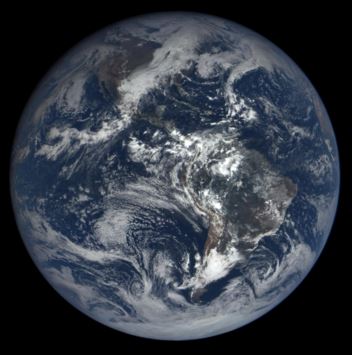
earthOn Monday October 19, 2015, NASA told us about a satellite camera that will take pictures of the Earth from 1 million miles away every day and the images will be made available for all of us to see on their new website .

The camera is mounted on the satellite called Deep Space Climate Observatory (DSCOVR), a partnership between NASA, the National Oceanic and Atmospheric Administration (NOAA) and the U.S. Air Force. Its primary mission,
according to NOAA, is to “maintain the nation’s real-time solar wind monitoring capabilities, which are critical to the accuracy and lead time of space weather alerts and forecasts from NOAA.”

The DSCOVR satellite performs important meteorological duties too, but NASA’s Earth Polychromatic Imaging Camera (EPIC), which will snap at least a dozen color images of the earth as it rotates, is stealing the show.  According to NOAA, each daily sequence of images will reveal “the whole globe over the course of a day.” Image sequences from previous days will also be archived on the site and can be searched by date and continent.

earth2
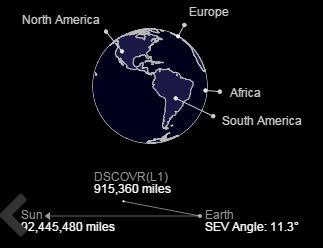
The satellite is always located between the Sun and the Earth, so the pictures are always “in the sun”. Of course, it might be cloudy here on Earth, but the pictures will still be good!

Be sure to check out these amazing images at epic.gsfc.nasa.gov. The almost realtime pics even include a changing diagram that shows where the satellite is in relation to the Sun and the Earth.

This NASA/NOAA site is well worth your time.

Unknown's avatar

Plastic Problems

We all know that plastics have become a major problem for the birds in the air and the fishes in the sea.  Plastics never deteriorate and tend to be colorful and attractive.  There are many sites around the planet where you can find lots more information about the negative aspects of plastics.  Following are my personal plastic pet peeves. 4 ps 🙂

A few years ago, I was walking on the Coast Guard Pier in Monterey and I saw a sea gull all tangled in some plastic wrapping, string-like stuff, possibly fishing line or soft-drink container material.  The bird could not get out of the stuff, it was behind a locked fence, and every time I tried to get close, it moved away.  There was nothing I could do, except feel sick.

I vowed to always cut any circles I find in plastics I use, to always pickup any loose fishing line I run into, and to never forget that image.

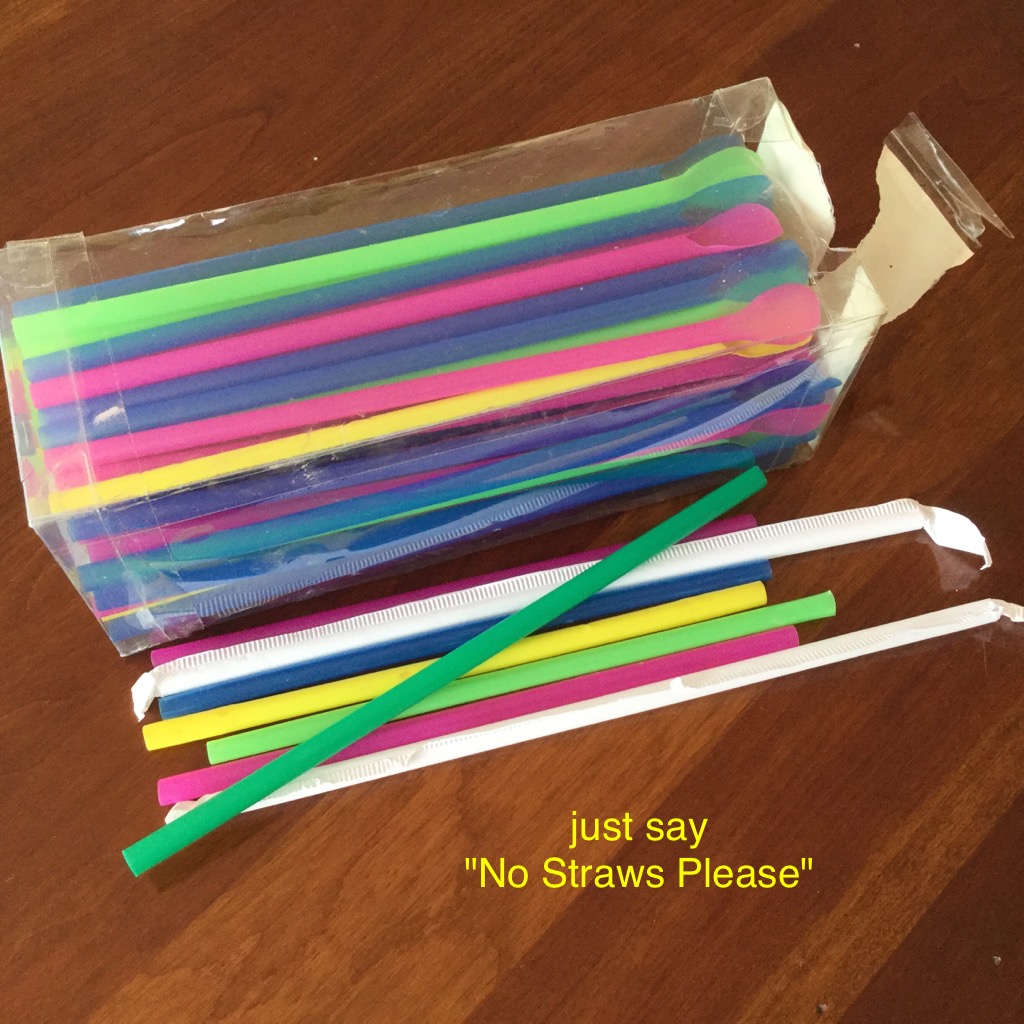
Time marches on.  One day two of my grand-daughters were visiting and we went out to lunch.  The waiter brought straws.  They had a fit, and said “No straws please”.  They reminded me that we only use straws once and then they get thrown away.  Most straws produced these days are plastic!  The lesson I learned from them is that things we use only one time should not be made of plastic!  And if they are, we should refuse to use them.  Here are a few of those items.


If the straws are made of paper, fine, use them. If made of plastic, speak up and say no.

plastic_straws


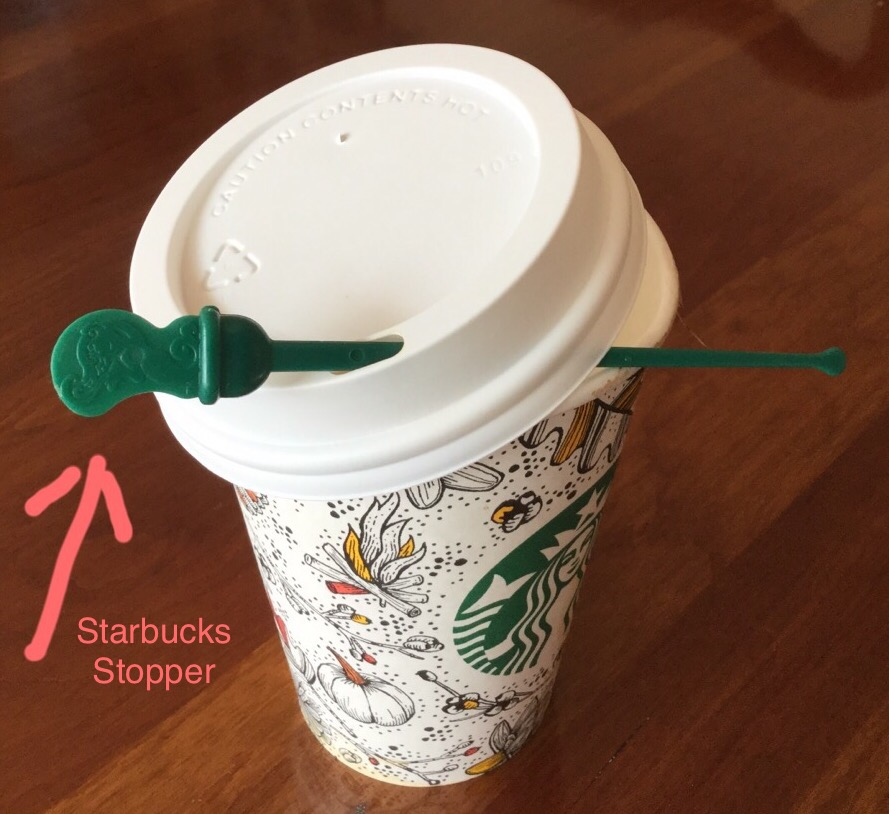
I love Starbucks coffee. But those damned stoppers are really just a one-time use, live-forever, kind of thing. What is even worse, if you get a coffee at the drive up window and the stopper is already in and you tell them to remove it, they will toss it in the garbage can! Please say “No stopper” when you order.

plastic_stopper


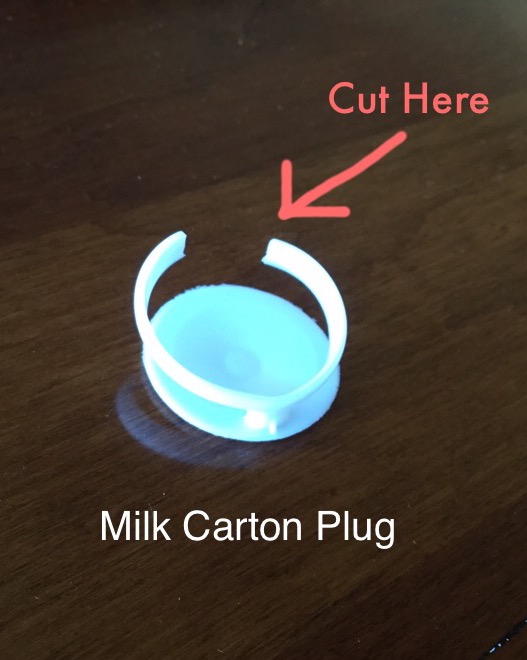
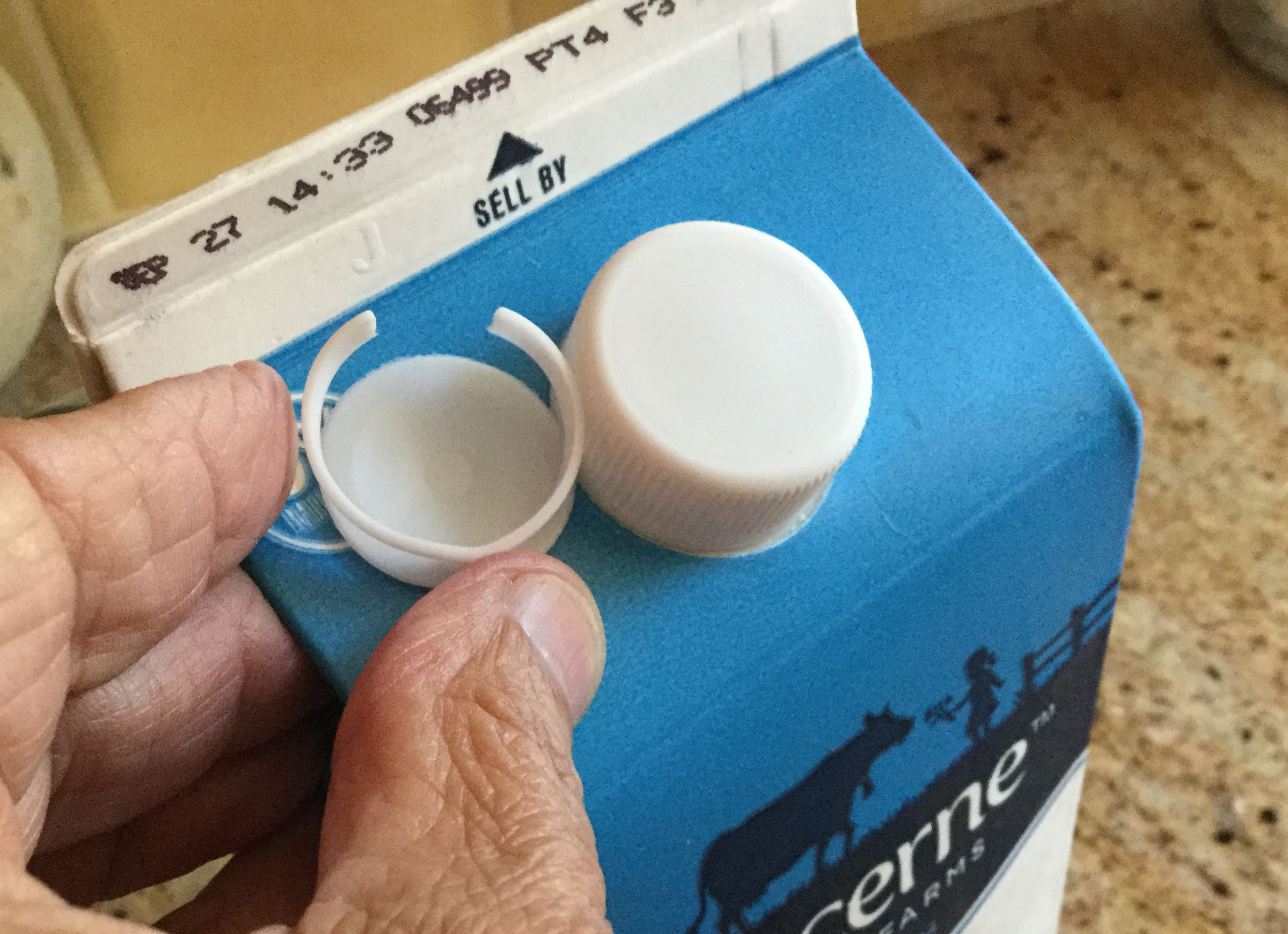
Milk cartons have two types of opening: all carton, or with a plastic opener. Guess what — the plastic opener has a little pull-tab that has a ring on it. Small birds can get caught in that ring! Cut the thing.

plastic_milk1
plastic_milk22


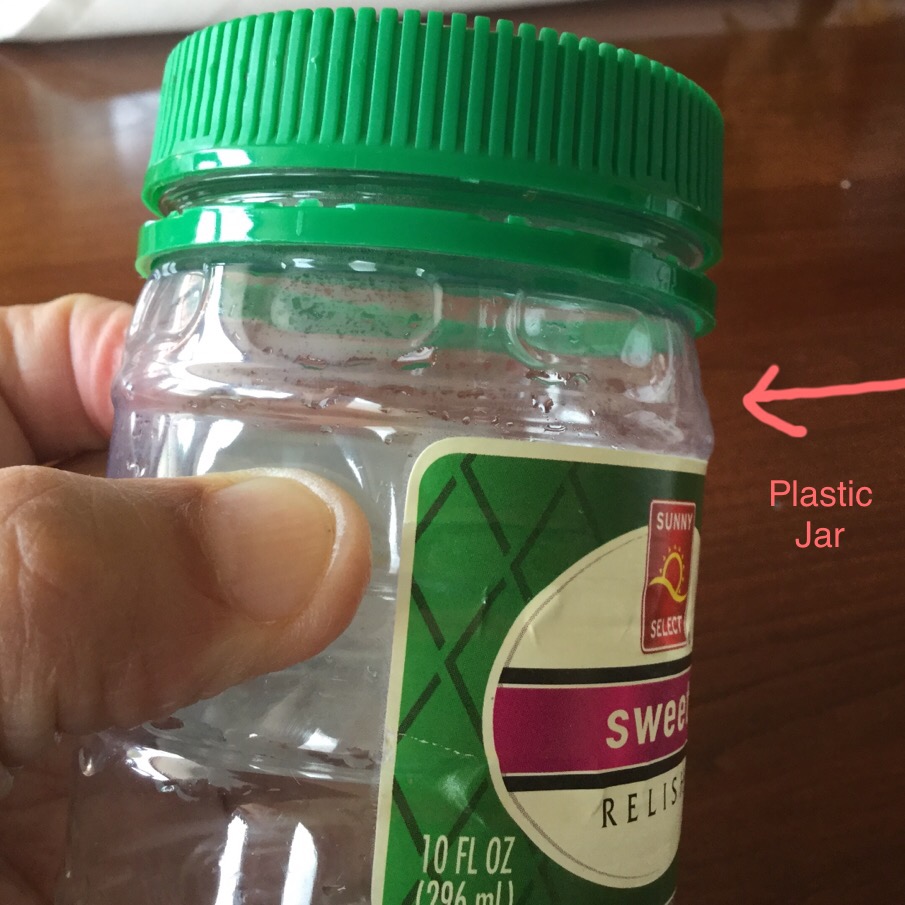
The other day, I bought a jar of relish. I wasn’t paying attention and grabbed the cheapest item on the shelf. When I got home, I realized the jar was made of plastic. Damn. I made a mental note to always buy the glass jars! They might cost a bit more, but so what. The savings just isn’t worth the potential harm the plastic jar will cause.

plastic_jar


Unknown's avatar

Super Harvest Blood Moon, a Total Lunar Eclipse, Sept 27, 2015

BloodMoon

from National Geographic

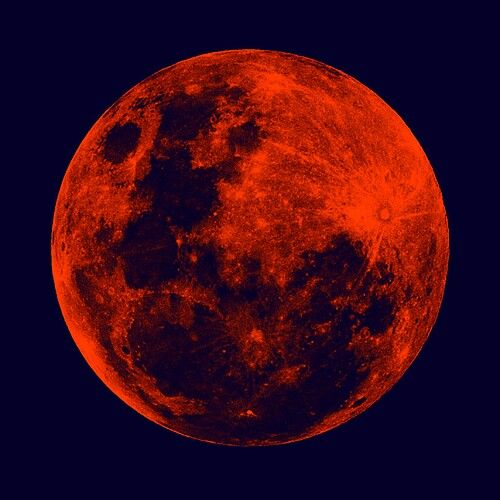
On the evening of September 27, three separate lunar events converge. The total eclipse coincides with the full moon nearest the fall equinox, known as the harvest moon. What’s more, the moon is at its closest approach to Earth for the year, making it also a supermoon or perigee moon. That’s why it’s being coined by some as a Super Harvest Blood Moon.

This confluence has happened only five times since 1900. According to NASA, the last time we saw this celestial triple combination was in 1982, and it won’t repeat until 2033.

The most spectacular part of the eclipse will be the totality phase, when Earth’s shadow completely covers the moon and turns it an eerie red. The moon will dip into the deepest and darkest part of Earth’s shadow, or umbra, during the totality phase, which lasts as long as 72 minutes.

This weekend’s blood moon will be the last in a series of four lunar eclipses, dubbed a tetrad, over the last two years. That pattern won’t repeat for another 20 years or so.

Click the above link to learn even more about this unusual lunar event.

Below is the schedule for this eclipse in North America. Note that the moon doesn’t actually rise in the USA until after the eclipse has already started.

Pacific Zone
Begins: 5:11 pm
Moon Rise: 6:54 pm
Maximum: 7:47 pm
Ends: 10:22 pm

Mountain Zone
Begins: 6:11 pm
Moon Rise: 7:54 pm
Maximum: 8:47 pm
Ends: 11:22 pm

Central Zone
Begins: 7:11 pm
Moon Rise: 8:54 pm
Maximum: 9:47 pm
Ends: 12:22 am

Eastern Zone
Begins: 8:11 pm
Moon Rise: 9:54 pm
Maximum: 10:47 pm
Ends: 1:22 am

May you all have clear skys.

“It’s what you learn after you know it all that counts.” John Wooden